Leaving Your Employer's Plan
How to move from job-based coverage to Medicare after 65, on time and without a gap or a penalty. Updated for 2026 for Arizona and Nevada.
The Timing Matters More Than Most People Expect
Plenty of people keep working, and keep their employer's health plan, after they turn 65. Medicare lets you wait to sign up for Part B in that situation without a penalty. The trick is leaving that plan the right way: on time, with the right forms, and with your next plan lined up.
This guide walks through the two questions that decide almost everything (is your coverage based on current work, and how big is the employer), the two windows to sign up, the penalties a late start can bring, and a switch-over checklist with the forms Social Security now takes online.
First published in 2018. Fully updated for 2026: the old "can't begin" months are gone, the employer form is CMS-L564, and both forms can go to Social Security online.
- Whether your coverage lets you wait on Part B, and why the size of the employer matters
- Why COBRA and retiree coverage don't count, and when the 8-month clock really starts
- Form CMS-L564, the employer form that proves your coverage, and Form CMS-40B
- How to send both forms to Social Security online, by fax or by mail
- A switch-over checklist, the HSA rule for Part A, and questions to take to HR

What You'll Learn
Two Windows to Sign Up
The 7-month window around your 65th birthday, and the 8-month window after job-based coverage ends. Sign up before the employer plan ends and pick a Part B start date with no gap.
The COBRA Surprise
COBRA feels like the same coverage, but the Part B window starts when the job ends, not when COBRA ends. It is the most common way people end up with a penalty that lasts a lifetime.
Proof of Employer Coverage
Form CMS-L564, filled in by each employer that covered you after 65, and what to send instead if your old employer can't sign.
A Step-by-Step Checklist
From the exact date your coverage ends to Forms CMS-L564 and CMS-40B, the shorter windows for your next plan, and the proof to keep in case a penalty shows up by mistake.
Get the Full Guide
The complete 2026 guide: the two enrollment windows, the late-enrollment penalties, the HSA rule, and a switch-over checklist with questions to take to HR. No email required. No strings attached.
9 pages. Takes about 10 minutes to read.
Quick Answers
How do I switch from my employer's health plan to Medicare after 65?
If you're covered at 65 by a health plan from your or your spouse's current job, you can usually wait on Part B without a penalty. When that coverage or job ends, you have 8 months to sign up. Apply before the plan ends, choose the next month as your Part B start date, and send Social Security two forms.
Key facts
- The Part B Special Enrollment Period ends 8 months after the group health plan coverage or the employment ends, whichever happens first. Source: Medicare.gov
- COBRA isn't considered group health plan coverage, and getting COBRA doesn't change when that Special Enrollment Period ends. Source: Medicare.gov
- For people on Medicare because of age, Medicare pays second to an employer plan when the employer has at least 20 employees and the coverage comes from current employment. Source: 42 CFR 411.172
- The Part B late penalty is 10% for each full 12-month period you could have had Part B and didn't, added for as long as you have Part B. Source: Medicare.gov
- Beginning with the first month you're enrolled in Medicare, your HSA contribution limit is zero, and that includes months of retroactive coverage. Source: IRS Publication 969
Employer Plan to Medicare, Answered
Can I delay Medicare Part B if I'm still working at 65?
Yes, if you have group health coverage based on current employment, yours or your spouse's; those months don't count toward the Part B penalty. With 20 or more employees, the employer plan pays first. With fewer than 20, Medicare pays first, and the plan might not pay for care if you don't have both Part A and Part B, so check with the employer. COBRA, retiree coverage and Marketplace plans don't count.
When should I sign up for Part B when my employer coverage ends?
Before it ends. You have 8 months after the job or the group coverage ends, whichever comes first, but don't use the whole 8 months. If you sign up while you're still covered, or within the first full month after, you can ask to delay your Part B start date up to 3 months, so choose the first day of the month after your coverage ends. Later in the window, coverage generally starts the month after you sign up.
Does COBRA count as employer coverage for Medicare?
Not for Part B. COBRA isn't considered group health plan coverage, and getting COBRA doesn't change when your Part B Special Enrollment Period ends, which is measured from when the job or the group coverage ends. Waiting for COBRA to run out is one of the most common ways people end up with a Part B penalty. COBRA drug coverage can still count as creditable for Part D, so keep those notices.
What are the Medicare late enrollment penalties?
Part B adds 10% of the standard premium for each full 12 months you could have had it and didn't. The 2026 standard premium is $202.90, so 2 full years late adds $40.58 a month. Part D applies after 63 or more days in a row without creditable drug coverage: 1% of the national base beneficiary premium, $38.99 in 2026, for each full uncovered month. Both are added for as long as you have that coverage.
What happens to my HSA when I sign up for Medicare?
Beginning with the first month you're enrolled in Medicare, your HSA contribution limit is zero, and that includes retroactive months. Part A signed up for after 65 can start up to 6 months back, but not before the month you turned 65, so Medicare.gov suggests stopping contributions at least 6 months before you apply for Medicare. You can still spend what's already in the account.
What forms do I need to sign up for Part B after leaving my employer plan?
Two. Form CMS-L564, Request for Employment Information, is filled in by each employer that covered you after 65, and Form CMS-40B is the Request for Enrollment in Medicare Part B. Send both to Social Security online at SSA.gov, or by fax or mail, and keep copies. If an employer can't sign, fill in its section yourself and include proof such as pay stubs showing health premiums or a W-2.
Sources
- Medicare.gov: When does Medicare coverage start?
- Medicare.gov: Avoid late enrollment penalties
- Medicare.gov: Costs for Medicare drug coverage
- IRS Publication 969: Health Savings Accounts
- 42 CFR 411.172: Medicare benefits secondary to group health plan benefits
General education. Medicare information here does not recommend any specific plan or insurance company. Rules and amounts change; confirm your dates with Social Security before acting.
The full guide goes deeper. Get the guide above.
Keep going
More on Medicare and health costs
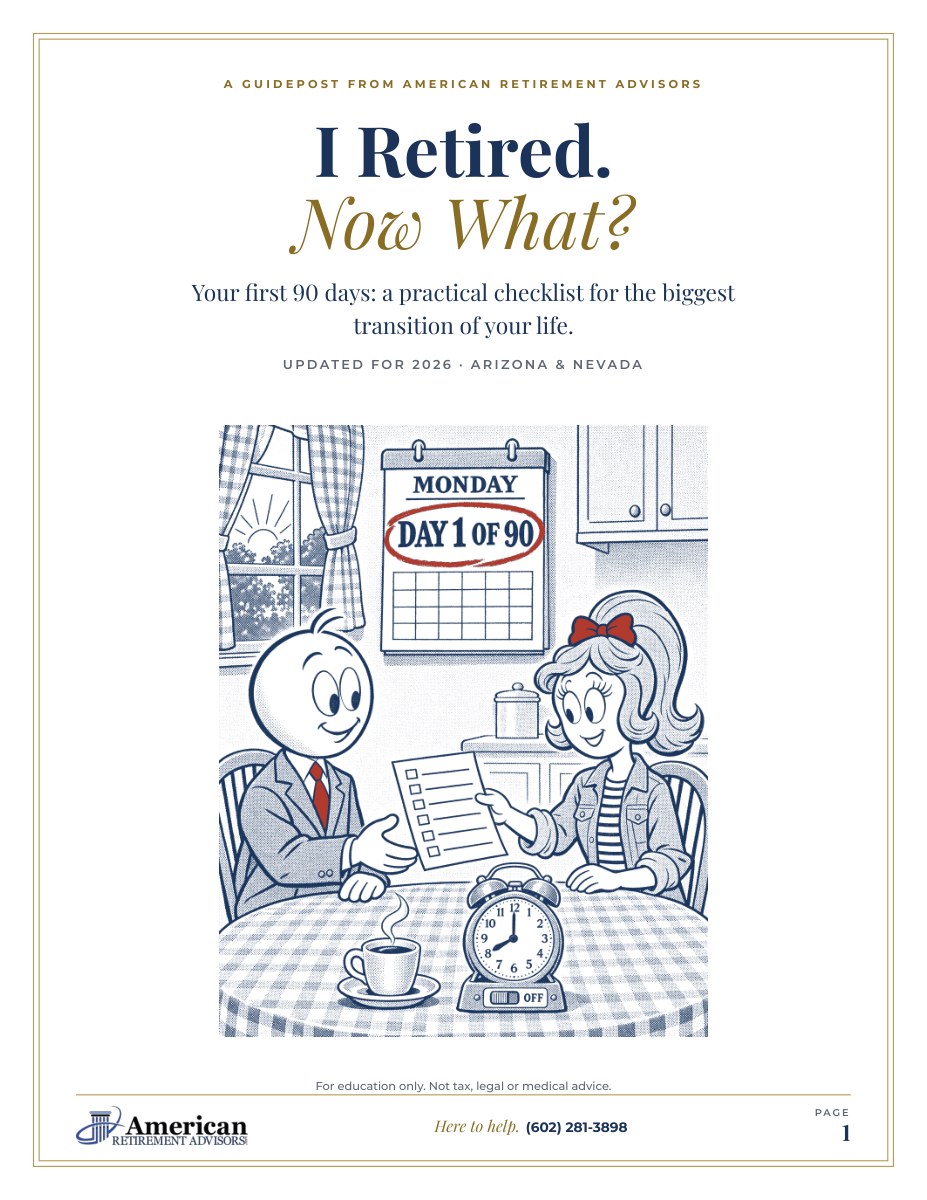 I Retired... Now What?A checklist for your first 90 days of retirement: income, health coverage and first-year taxes.
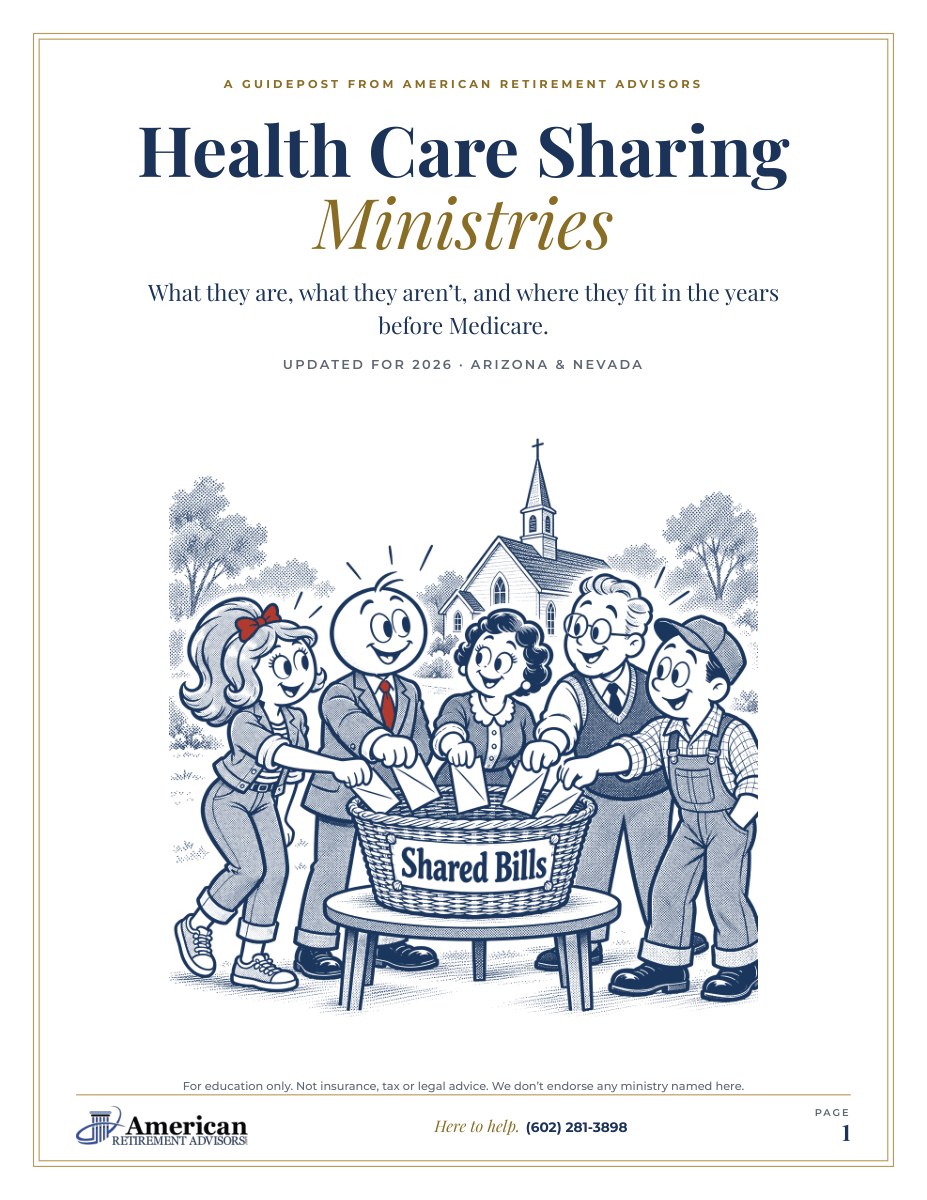 Health Care Sharing MinistriesWhat health care sharing ministries are, how they compare with a Marketplace plan, and why they don't replace Medicare.
- Listen Seven Ways In, a podcast series
- How we help Medicare planning
- Annual Enrollment Period Your plan letter came: what to do before December 7