Your HSA on Medicare
Medicare starts, and your Health Savings Account keeps working. When to make your last deposit, what the money can pay for, and how to make it last.
Medicare Starts. Your HSA Keeps Working.
Once you’re enrolled in any part of Medicare, you can’t add to a Health Savings Account. The money already in it stays yours, and it can keep paying for health care, tax-free, for the rest of your life.
This front-and-back overview covers the three moments that matter: before you sign up, after you enroll, and the long run.
- When to make your last deposit, and the backdated Medicare coverage that catches people off guard
- Which Medicare premiums your HSA can pay, and the one it can’t
- The costs Original Medicare leaves behind, from deductibles to hearing aids
- Receipts, beneficiaries and taxes: how to keep the account working for you and your family
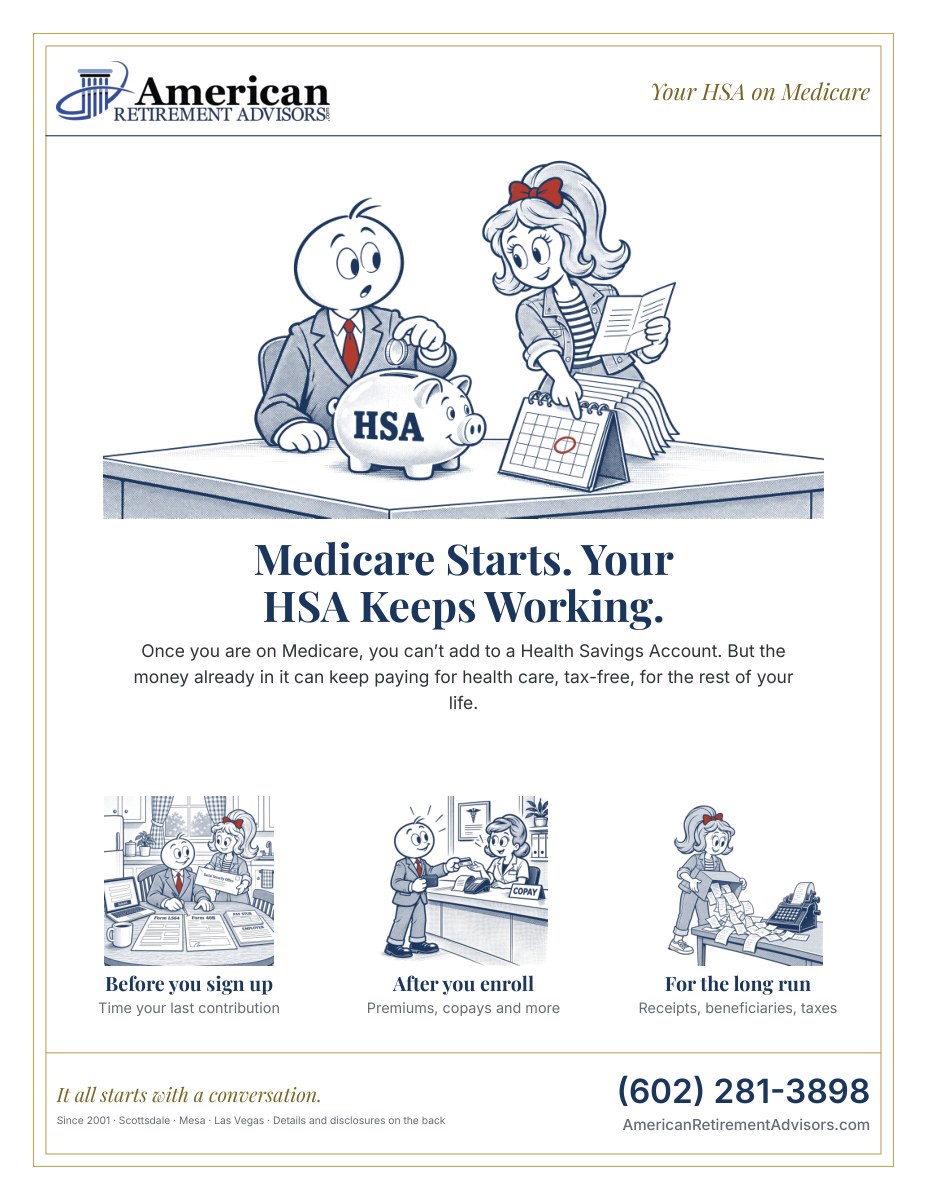
What You’ll Learn
Before You Sign Up
Contributions stop with Medicare. Signing up after 65 can backdate your coverage, so the timing of your last deposit matters.
After You Enroll
Your HSA can pay Medicare premiums, deductibles, copays and more, for you and your spouse, with no tax on the way out.
For the Long Run
There’s no deadline to spend it. Keep your receipts, name your beneficiary, and know the tax rules after 65.
Get the One-Page Overview
Both sides of the sheet our advisors hand out in the office. No email required. Print it and keep it with your health and tax papers.
2 pages, front and back. Takes about 3 minutes to read.
For educational purposes only. Not tax, legal or investment advice; talk to your tax professional about your own situation. HSA rules are federal rules and can change, and state tax treatment may differ.
Using HSA dollars for long-term care insurance? Read Long-Term Care Insurance and Your Taxes.
Keep going
More on Medicare and health costs
 Long-Term Care Insurance and Your TaxesWhich long-term care insurance tax break fits you in 2027, for business owners, people still working and retirees.
 The IRMAA TrapWhy a one-time jump in income can raise your Medicare premiums two years later, and what to do.
- Listen The Promise They Called Socialism, a podcast series
- How we help Medicare planning
- Annual Enrollment Period Your plan letter came: what to do before December 7