
What Changed About Retirement
The system changed. Nobody sent a memo. This guide explains what happened and why it matters.
The Rules Changed. Most People Missed It.
The retirement system you were promised doesn't exist anymore. Pensions gave way to 401(k)s. Inflation quietly doubled what retirement costs. Healthcare became a planning problem, not just a coverage question. And taxes in retirement feel nothing like taxes while working.
This 13-page guide walks through exactly what changed, when it happened, and why it matters for anyone within 10 years of retirement or already there.
- How we went from pensions to 401(k)s, and why it matters now
- What inflation actually did to milk, hospital stays, and tuition
- The healthcare gap between your last paycheck and Medicare
- Why retirement taxes feel completely different (IRMAA, RMDs, Roth windows)
- 8 original infographics with real data
Context Creates Clarity
From Pensions to 401(k)s
The 401(k) was never designed to be a retirement plan. It was an accident of the 1978 tax code. Here's how the responsibility for retirement quietly shifted from employers to employees.
What Inflation Quietly Changed
A gallon of milk, a night in the hospital, a year of college. What they cost in 1990 vs. today. The numbers tell a story most retirement plans still haven't accounted for.
The Healthcare Gap
Retire at 62, Medicare starts at 65. That 3-year gap costs more than most people expect. Plus the COBRA trap, marketplace premiums, and the coverage decisions that can't wait.
Why Taxes Feel Different
IRMAA surcharges, required minimum distributions, the Roth conversion window. The tax rules in retirement aren't what you practiced for 40 years. This section maps the new landscape.
8 Original Infographics
Every section includes a data-driven infographic designed for clarity. Here are a few from the guide.
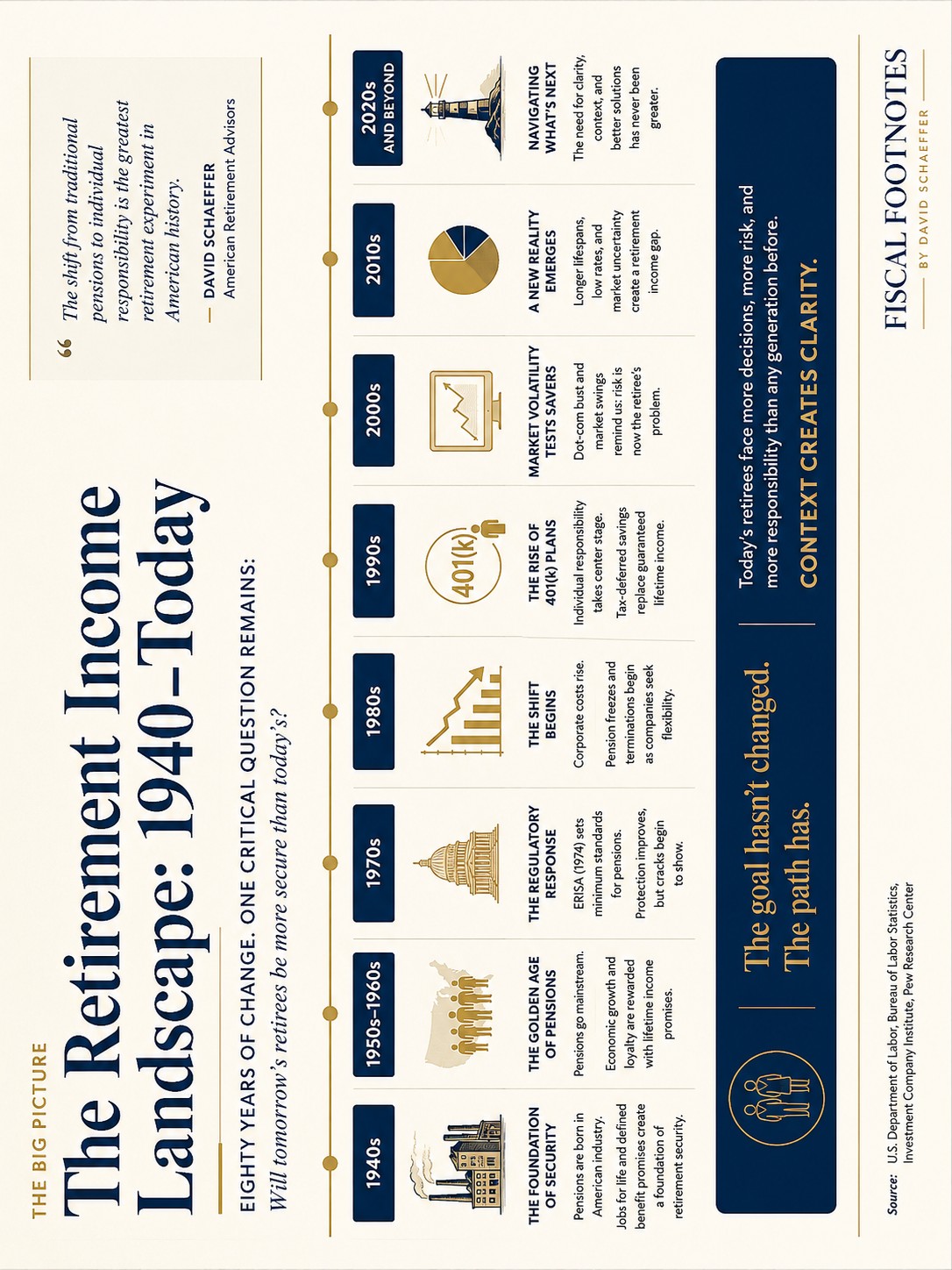
The Retirement Income Landscape: 1940 to Today
How retirement funding shifted from pensions to personal responsibility over eight decades.
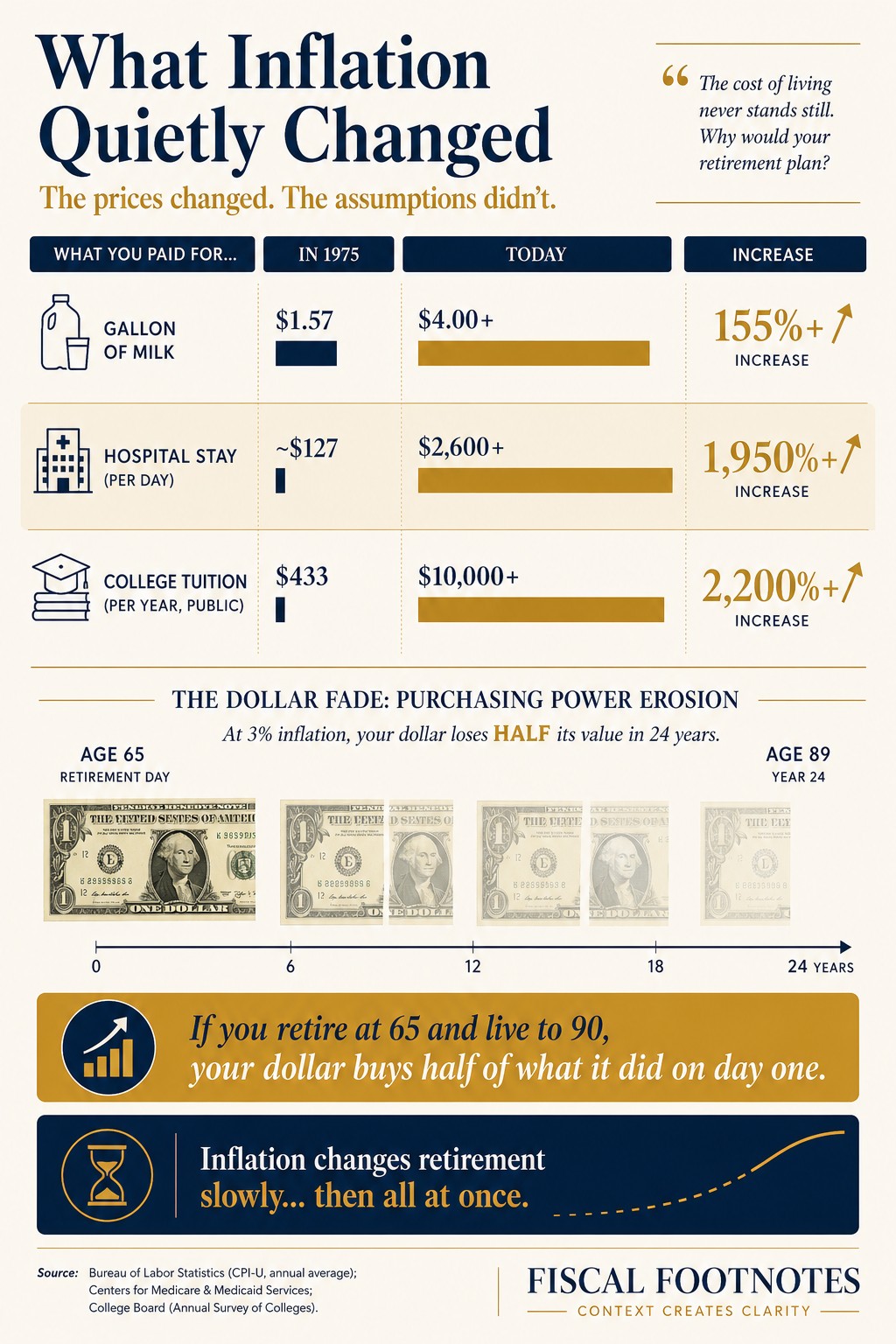
What Inflation Quietly Changed
Milk, hospital stays, and college tuition. What they cost in 1975 vs. today, and what that means for your plan.
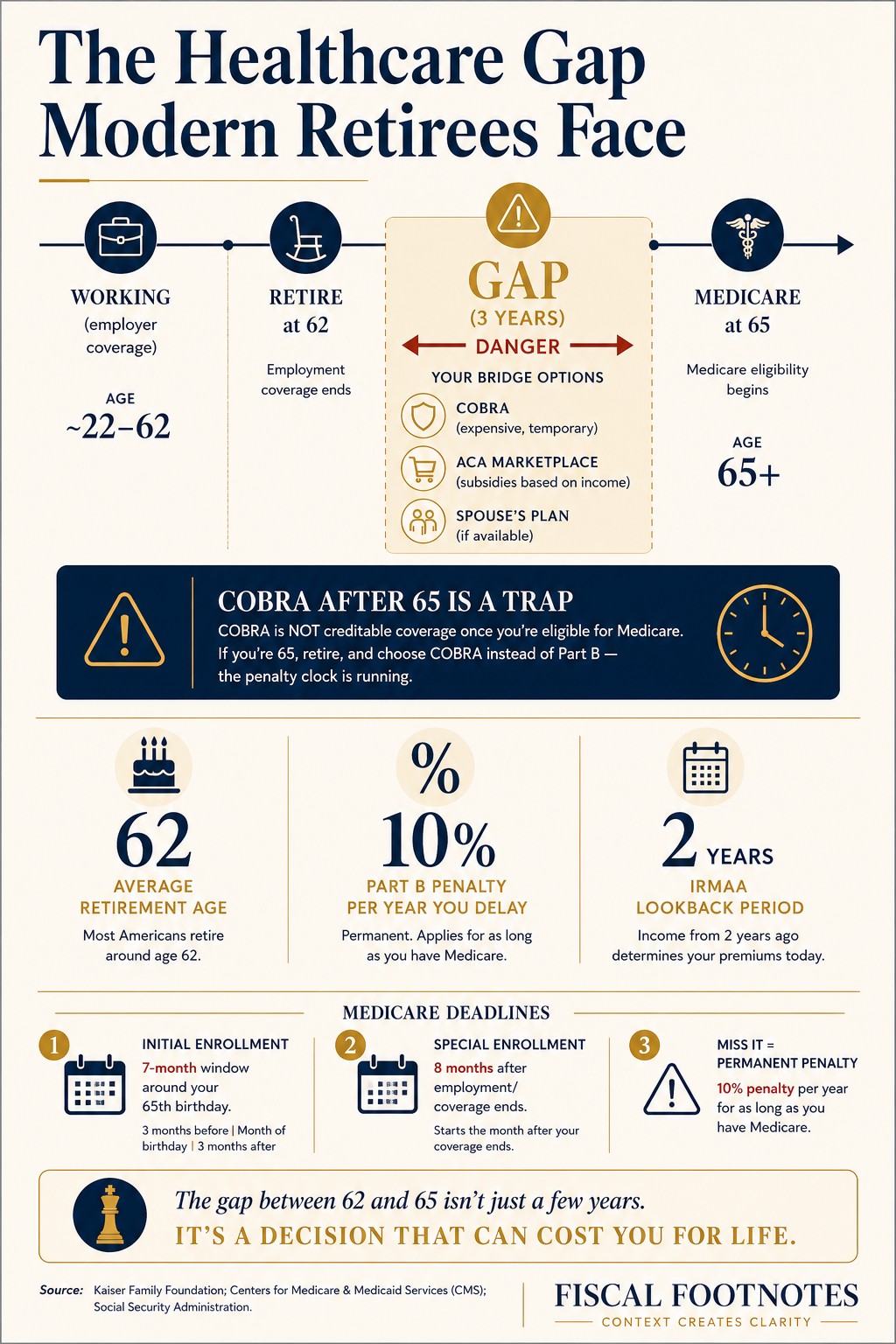
The Healthcare Gap Modern Retirees Face
The 3-year coverage gap between retirement and Medicare. COBRA traps, marketplace costs, and deadlines that matter.
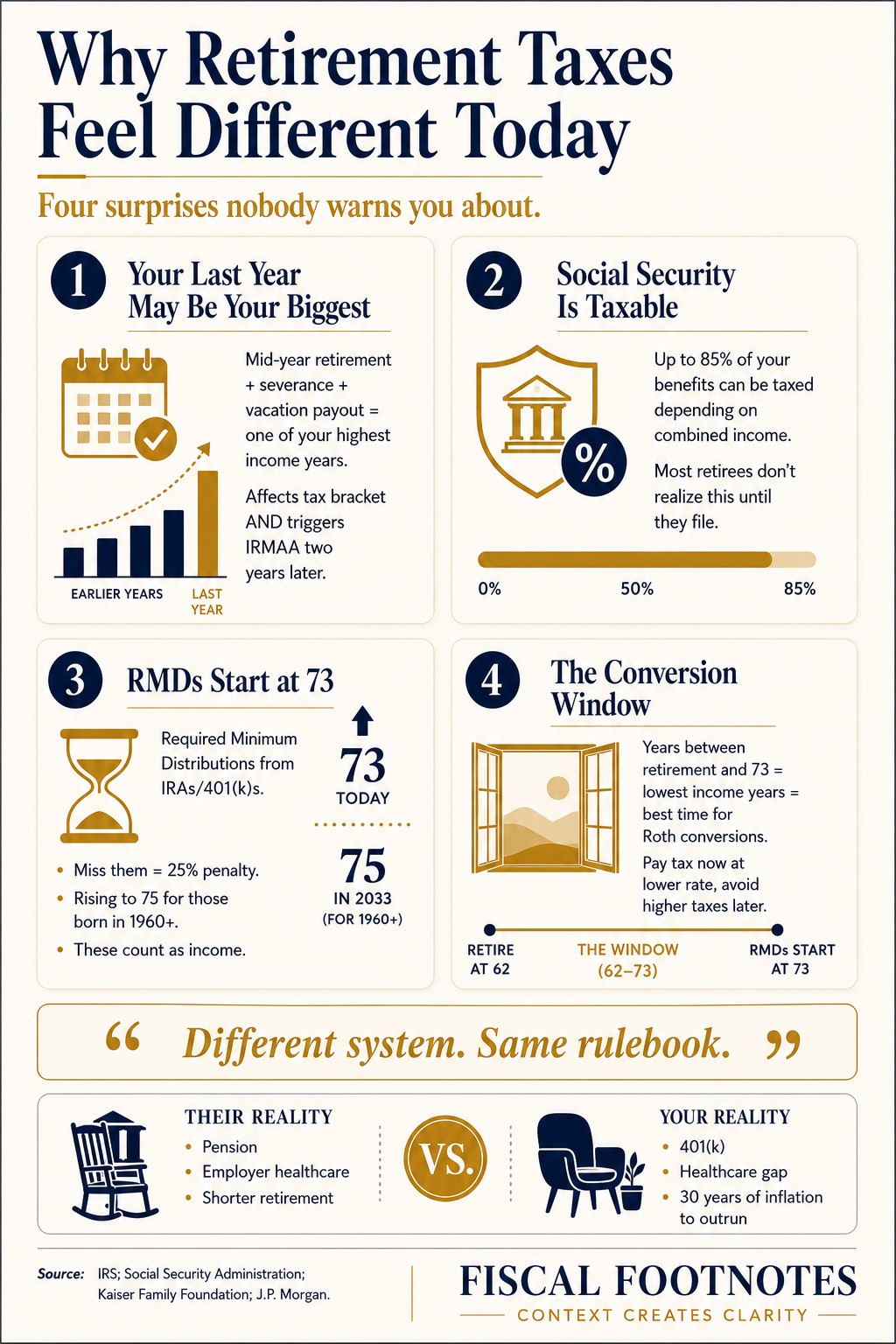
Why Retirement Taxes Feel Different Today
IRMAA, RMDs starting at 73, Social Security taxation, and the Roth conversion window most people miss.
Get the Full Guide
Enter your email below and we'll give you immediate access to the complete 13-page guide with 8 original infographics, real cost comparisons, and David's plain-English breakdown of what changed.
13 pages. About 10 minutes to read. We'll also send a quick check-in tomorrow to hear what you thought.
Your guide is ready.
The download should start automatically. If it doesn't, click the button below.
Quick Answers
What changed about retirement?
The job of funding retirement shifted from employer pensions to accounts you manage, starting with the 401(k), which Congress added to the tax code in 1978. Social Security's full retirement age rose from 65 to 67 for anyone born in 1960 or later. And if you retire before 65, bridging to Medicare is up to you.
Key facts
- Section 401(k) was added to the tax code by the Revenue Act of 1978 (Public Law 95-600). Source: 26 U.S.C. 401
- Full retirement age is 67 for anyone born in 1960 or later. It was 65 for people born before 1938. Source: Social Security
- Medicare usually starts at 65. After 65, COBRA doesn't count as job coverage for putting off Part B without a penalty. Source: Medicare.gov
- Signing up for Part B late adds 10% to the premium for each full 12 months you could have had it, for as long as you have Part B. Source: Medicare.gov
- Social Security benefits rose 2.8% for 2026 with the yearly cost-of-living adjustment. Source: Federal Register
Retirement Questions, Answered
Why do I have to manage my own retirement income now?
Because many workers now save in accounts like a 401(k) instead of earning a traditional pension that pays a set check for life. Section 401(k) was added to the tax code in 1978 and grew into a main workplace plan. With a pension, the employer carried the investment and longevity risk. With a 401(k) or an IRA, you decide how much to save, how to invest it and how fast to spend it.
What is my full retirement age for Social Security?
It depends on your birth year. It is 66 for people born from 1943 through 1954, then rises by two months for each later birth year, reaching 67 for anyone born in 1960 or later. You can start benefits as early as 62 with a reduced amount, or wait past full retirement age and earn delayed retirement credits of 8% a year until 70.
Why is health care a bigger retirement issue now?
Medicare usually starts at 65, so anyone who retires earlier has to bridge the gap with a spouse's plan, COBRA, retiree coverage or a Marketplace plan. Timing matters at 65 too. COBRA and retiree coverage don't let you put off Part B without a penalty, and a late Part B signup adds 10% to the premium for each full 12 months you could have had it, for as long as you have Part B.
Why do taxes feel different in retirement?
More of your income can be taxable than you expect. Up to 85% of Social Security benefits can be taxed, depending on your combined income. Traditional IRA withdrawals are taxable, and required minimum distributions start at 73, or 75 if you were born in 1960 or later. A high-income year can also raise your Medicare premiums two years later, through the income-related surcharge called IRMAA.
How does inflation change a retirement plan?
Retirement can last decades, so inflation compounds. At 3% a year, prices roughly double in about 24 years, so a dollar covers about half as much. Social Security gets a yearly cost-of-living adjustment, 2.8% for 2026, but many other sources of income don't adjust on their own. A plan should test your income against rising costs, not just today's budget.
Sources
- 26 U.S.C. 401 and its amendment notes (Revenue Act of 1978)
- Social Security POMS RS 00615.003: Full retirement age
- Medicare.gov: When does Medicare coverage start?
- Medicare.gov: Avoid late enrollment penalties
- Federal Register: Cost-of-living increase and other determinations for 2026
General education, not tax, legal or investment advice. Rules and amounts change each year.
The full guide goes deeper. Get the guide above.
Keep going
More on Social Security and income
 Is Your Social Security Right?How to check your Social Security earnings record and fix mistakes before they cost you.
 Retirement Income PlanningYellow, green and red money: how three types of money can work together as one income plan.
- Listen The Gap Years, a podcast series
- How we help Retirement income planning
- Written by David Schaeffer